Highlights
- Deanna and her family care for a herd of purebred Jerseys on her 300-acre farm in Prince Edward Island.
- The herd has been closed for seven years, with Deanna taking care of the herd management.
- She is also a leader in her breed association, the local co-op, and a mother of four.
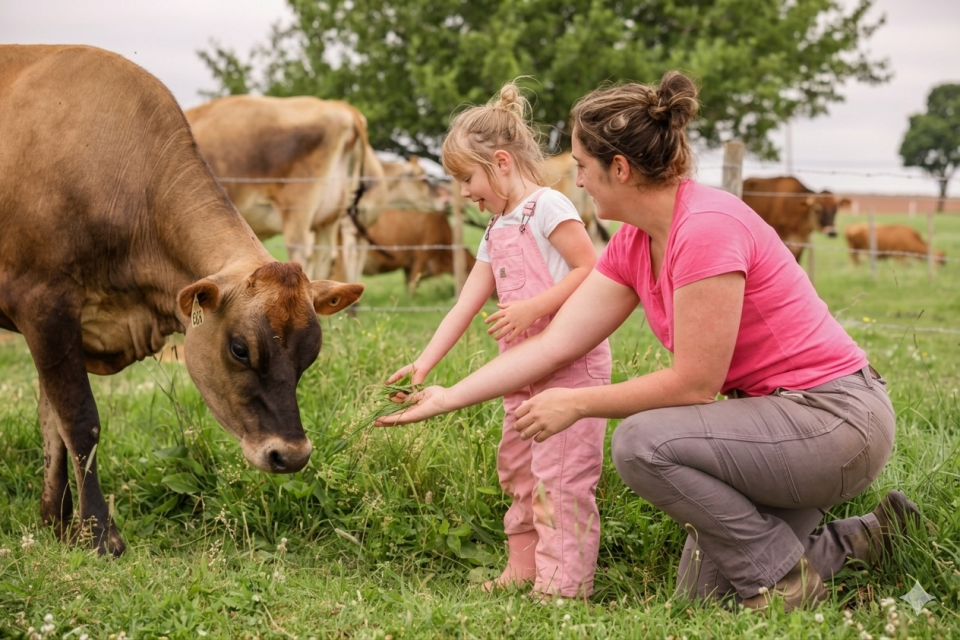
PEI dairy farmer Deanna manages a herd of 67 purebred Jerseys on 300 acres co-owned with her parents. Across the operation, they take self-sufficiency seriously: growing all their grass and corn for silage and raising 40 acres of cash crops, they also achieved a closed herd seven years ago. A closed herd is one that does not need cattle purchased or introduced to the herd from outside sources.
This independence does not mean the farm goes it alone. Deanna is well-known to Island dairy farmers and Jersey breeders across the region as someone they can count on. Her work on and off the farm – not to mention working with her husband to raise four children under the age of 10 – keeps her extremely busy. She wouldn’t have it any other way.
“It's like having 10 tabs open on your computer at all times,” she said. “But I just love my cows so much.”
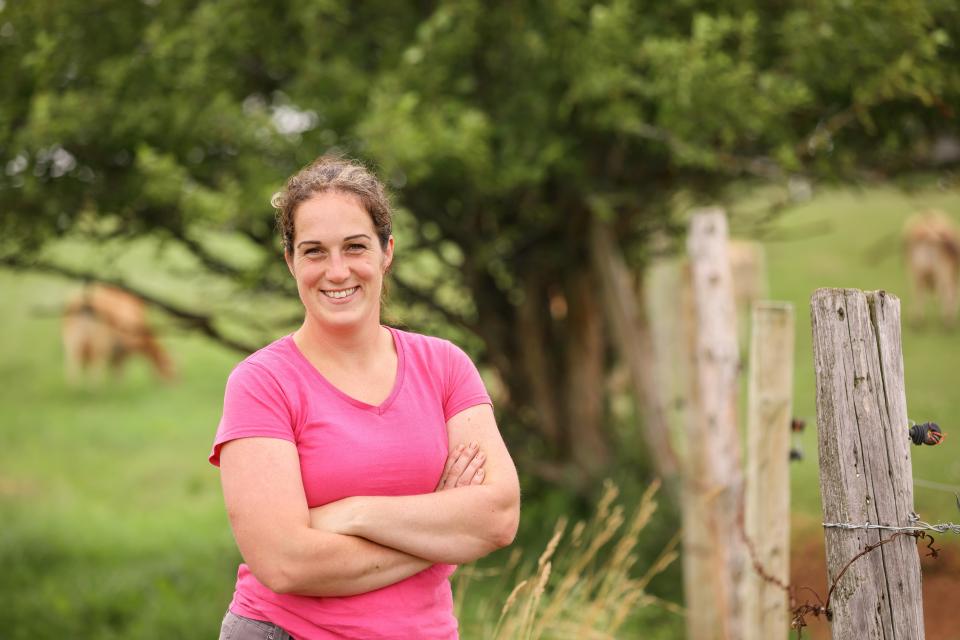
Deanna’s experiences in and out of dairy farming all go back into enhancing her herd.
When Deanna and her parents bought their family farm in PEI, they began to transition the herd from Holsteins to Jerseys. “We had always loved Jerseys and enjoyed working with that breed,” she said.
But the goal of reaching a closed herd started because of financial necessity.
“The cost of transport to PEI really started it,” she said. "The price to truck animals in really made it hard to justify buying cows often. Once we had the barn full of Jerseys, we stopped buying and just started working our way up. Now, I make all the decisions on the cows, the genetics, everything.”
“It blossomed into a passion. I know every single cow, their stories, their calves. Especially having a close herd, you fall in love with these families.”
Whether it’s the first Jersey they bought, the first to earn an Excellent genetic appraisal, or because a cow was a favourite of one of her children, each member of the herd is memorable to Deanna.
“We currently have fifth-generation Jerseys in the herd now, and it’s really shocking how fast time goes. You look and see three generations standing in the barn together.”
Leading beyond the farm.
Deanna is a natural leader. When she and her husband rejoined the industry and put down roots in PEI, Deanna quickly became an active member of the wider dairy community. Now, she’s a regional director and a member of her breed association’s executive team, while also serving on the board of a local co-op store. She found a lot of inspiration in fellow women in farming, many of whom also lead on and off their farms.
“My friend pulled me onto the co-op board,” said Deanna. “She said if we want to keep a local co-op, people need to raise their voice and be a part of it. We want to see each other thrive.”
Balancing these obligations with daily milking and parenting means Deanna puts her natural skills and networking chops to work, creating a greater sense of community.
“Everything that you volunteer for and everyone you work with makes your circle bigger. You must be willing to talk to people and listen to their advice. Suddenly, you have this network of people you can lean on.”
“With dairy farming, no one's going to be coming after my farm or my cows. It's not really a competition. It's true friendship, and it's helping each other out.”
Deanna doesn’t feel that her leadership skills are unique to her. Rather, they are skills the whole sector will benefit from as more women become leaders, whether on the farm or in stakeholder organizations.
“Women are assertive,” she said. “We're constantly reassessing priorities, and this is often a very natural skill of women in general. It's done throughout the day - in the barn, at the board, or at home. And it's not even thought about or noticed. We don't identify that these are actually incredible skills of women.”
With every farm she visits, meeting she attends, and herd choice she makes, Deanna is one of the many women in Canadian dairy making sure these skills are acknowledged and celebrated.