Highlights
- Sarah runs a closed-herd dairy farm in B.C., caring for 340 cows and farming 170 acres.
- "Leadership of the industry should reflect the people in it, and there are a lot of women in Canada making dairy farms run every day.”
B.C. dairy farmer Sarah is known in her community for how she advocates for the industry, so much so that it might surprise some to learn she didn't grow up on a dairy farm.
Even as a relative newcomer, Sarah has never stopped leading on the farm and beyond. She uses her skills to stand up for Canadian dairy and tell the story of the passion running through the industry - in front of government, to consumers, and by sharing the stories of her fellow farmers.
"I’ve learned that if you want to be a woman leader in Canadian dairy, you have to be very intentional with your plans,” she said. “You’ve got to be brave and persistent. It doesn't just happen. I hope people like me showing up and contributing makes it easier for those coming next.”
From the outside in: how Sarah found her place in the dairy industry
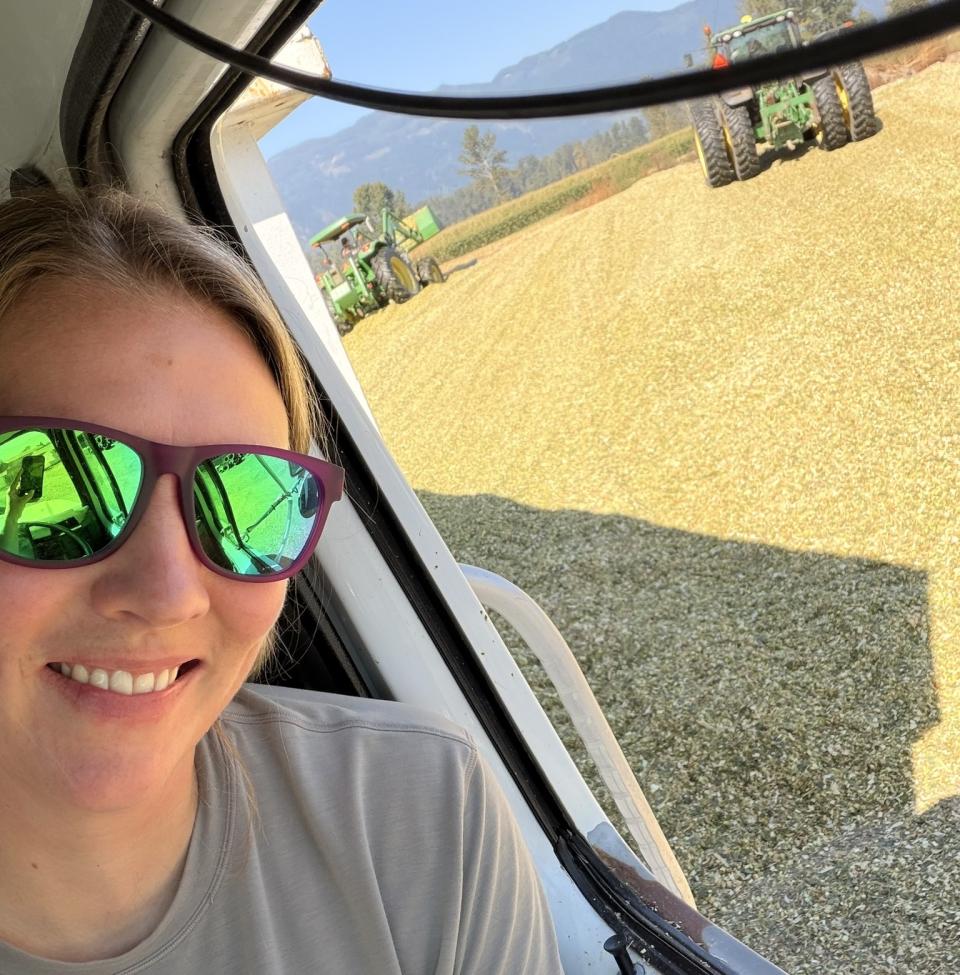
Sarah runs a closed-herd dairy farm in B.C., caring for 190 cows and farming 170 acres with her husband, Gene, and his brother Grant.
It's not exactly where she saw herself ending up: before meeting her farmer future husband in a wedding party, Sarah earned a degree in Canadian Studies with an eye on fields like international diplomacy.
But being new to something never stopped Sarah from diving headfirst into the experience. After joining the family's farm team, Sarah got right to work, learning the ins and outs of running a dairy operation and where she could use her skills.
Sarah found she fit right in on a farm focused on herd performance and efficiency – "just always doing a little something to be a little better," as Sarah puts it.
"We've been fortunate to be part of Lactanet's best-managed herds for the last number of years," she said. “It’s a fun acknowledgement of our on-farm success. We’ve got a great team.”
Sarah soon embraced the business side of dairy, becoming a key part of strategizing and succession planning. The more experience she earned, the more dairy's importance resonated with her, much the same way forestry had for her family growing up.
"I really felt we had something so special in dairy, specifically in Canada," said Sarah, whose dad works in B.C.’s forest industry. "I saw forestry come and go from the community that I grew up in and I thought, 'I'm not letting that happen here.' Supply management is important for farm businesses, but also for their animals, their communities and the nation’s food security, and people outside the industry don't understand that as much. I’ve always seen it as a privilege and opportunity and never a right. It’s incumbent on us as farmers to continue showing that value."
She didn't waste time putting this perspective to work off the farm. Sarah was building an audience through her advocacy on social media and at industry events, quickly finding a new niche for herself.

Leading by example: how listening and understanding have helped Sarah help other dairy farmers
Sarah is now a prominent voice in Canadian dairy. She sits on her provincial dairy board, acting as vice chair for four years until she was elected to represent B.C. at the national level, too.
"Originally, when I put my name up for election to the provincial board, I had been on Instagram for years, and people only knew who I was because they'd seen pictures of my farm."
When the opportunity to host The Canadian Podcow came along, Sarah saw it as a good way to grow her connections in Canada and hear more perspectives from our varied industry.
"Once you understand what motivates farmers, you learn why they can be rigid about some of the things. It's easy to say, 'Oh, that's not important to me sitting here in British Columbia' when it's very important to someone in Newfoundland."
Sarah does all this while helping run the business and raising two boys. She shows how Canadian dairy offers many avenues for those eager to use their talents.
"For me in leadership, I'm a disruptor," she said. "There's a lot of pressure right now on women to be all things to all people but being yourself is the key. I hope we get to a point where it comes more easily for people – where differences are truly embraced."
Sarah's experiences represent those of many women leading in the Canadian dairy industry. Her story goes far beyond the boxes of working mom, on-farm businessperson, and industry leader. She's showing what the future holds for women carving their own paths in agriculture.
"We need to understand each other better. And the better that I've understood other parts of Canada or different farming practices or people in general, the better I've been able to serve the board and build strength and community. Leadership of the industry should reflect the people in it, and there are a lot of women in Canada making dairy farms run every day.”