Supply Management: Cementing Canadian Food Security
By ensuring dairy farmers produce enough to meet the needs of Canadians, supply management helps the sector prevent wild fluctuations in the farm-gate price of milk and enhance Canada’s food sovereignty and stability.
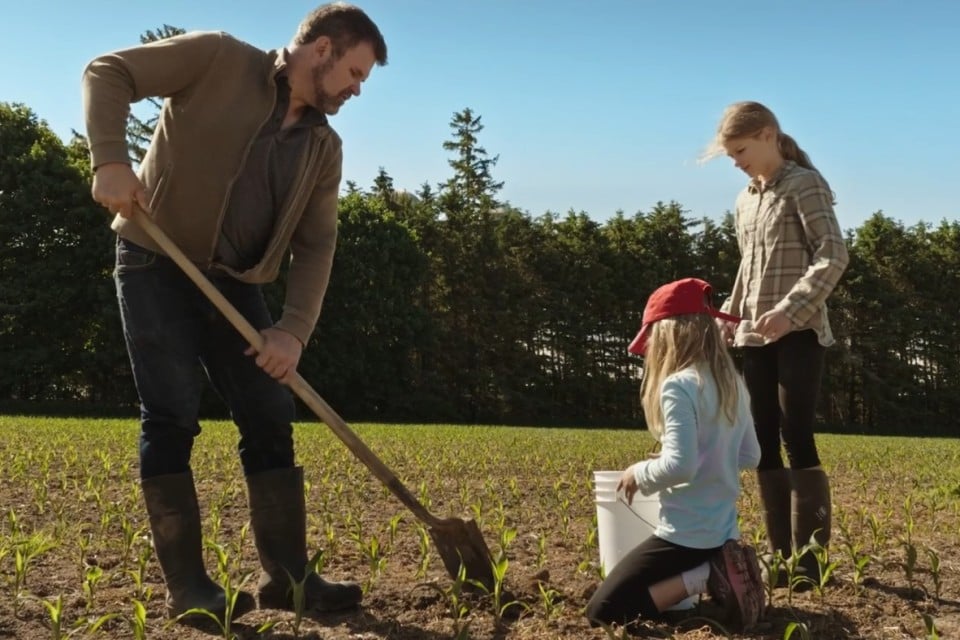
Like all Canadians, our farmers believe that individuals and families should have access to nutritious high-quality food, so that they can pursue a healthy lifestyle. In Canada, a growing number of households are food insecure and struggle to get adequate nutrition and other basic needs.1, 2
Dairy farmers in Canada produce high-quality, nutritious milk under stringent standards, right within our own borders. This milk is then transformed by local processors into thousands of dairy products that Canadian consumers have come to know and love.
Feeding the Nation: Food Security and the Supply Management System
Rather than looking outward for our food, a strong Canadian dairy sector means we can be less dependent on foreign countries to meet Canada’s food requirements.
One of the ways Canadian dairy farmers ensure a consistent supply of milk at stable prices is through an agricultural framework called supply management. The primary objective of that system is to produce enough milk to meet demand.
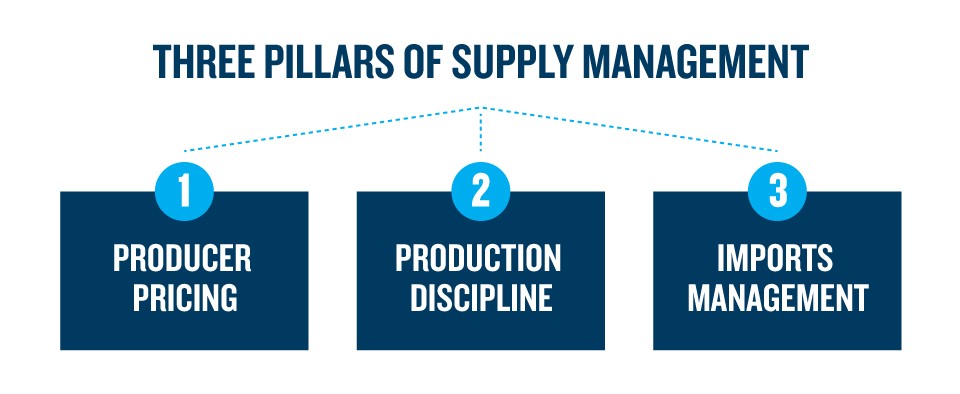
Under supply management, farmers work collaboratively with provincial milk marketing boards, dairy processors and the Canadian Dairy Commission to ensure enough milk is produced to meet demand.
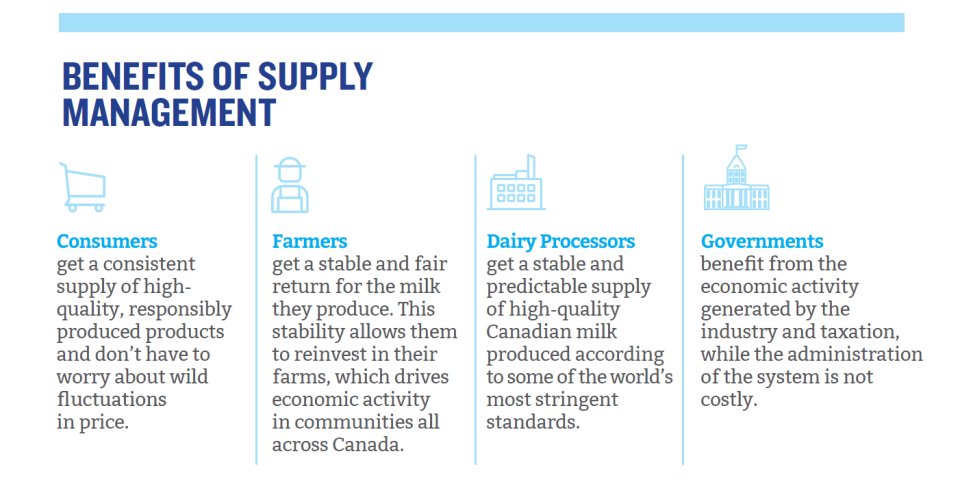
Why does this matter?
• Supply management has been weakened by recent trade deals, which provide foreign countries greater access to the Canadian dairy market.
• Overreliance on dairy imports puts decision-making and ownership of our food supply in the hands of foreign suppliers and governments. That means we are more vulnerable to global issues beyond our control, like economic boom-and-bust, natural disasters, and even conflicts between governments. Instead, we choose the ability to stand strong at home.
• Imported dairy products may not follow the same stringent production standards as food produced in Canada – this is especially true when it comes to dairy. For instance, all Canadian milk is produced without artificial growth hormones; there are no such guarantees with the milk produced in some other countries. Canadian dairy farmers also follow rigorous high-quality and safety standards.
• Many dairy farmers in Canada are implementing practices to further protect the environment as the sector works towards net zero by 2050. For the dairy sector, “net zero” means achieving a balance between greenhouse gas emissions produced and those reduced or sequestered on farms.
Supply management in action: Dairy at the onset of the COVID-19 pandemic
The COVID-19 crisis was a stark reminder of the responsibility of countries to ensure their populations have reliable access to safe, nutritious foods. It also showed us the risk of a model that relies disproportionately on trading partners for medical supplies.
When the pandemic first struck in Canada, our sector faced sudden, massive fluctuations in demand for milk and dairy products. Dairy farmers and processors had to adjust quickly to the shift in purchasing habits and formats needed as restaurants and other food service-reliant businesses were forced to close.
Thanks to the coordination and collaboration inherent under supply management, the dairy sector was able to act collectively to adjust to this shock in a relatively short period of time. The dairy industry continues to meet changing demands as efficiently as possible today.
Giving back to the community
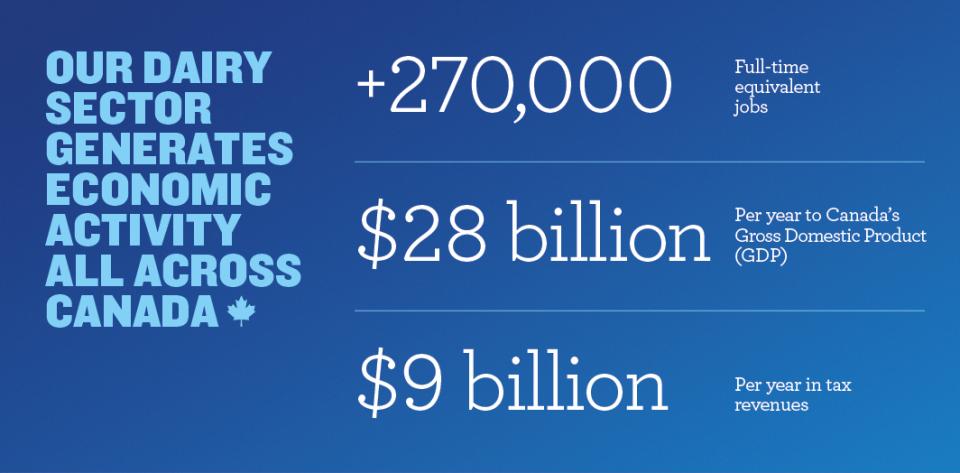
Canada’s dairy sector generates ample economic activity and helps to sustain specialized expert roles, particularly in rural communities, which need it most. The sector supports over 270,000 full-time equivalent jobs, contributes $28 billion to Canada’s GDP, and generates $9 billion in tax revenue annually.
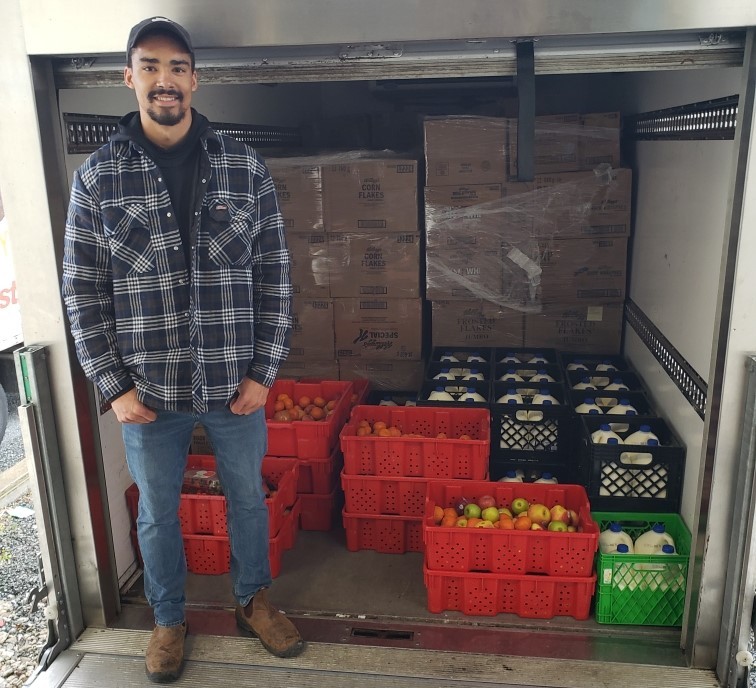
Dairy farmers and processors across the country also donate millions of dollars’ worth of products to Canadian food banks each year. While food banks are not a permanent solution to food insecurity, these contributions help support members of the communities in times of need. During the 1st year of the COVID-19 pandemic, dairy farmers and processors donated more than $10-million worth of dairy products to local food banks.
Sources
(1) Centre for Studies in Food Security, Toronto Metropolitan University, October 2020
(2) PROOF. Who are most at risks of household food insecurity, consulted in January 2026.