
Biosecurity
The health of the herd is a top priority for Canadian dairy farmers. Beyond their dedication to the comfort of their cattle, dairy farmers also know that happy, healthy cows make better milk.
They say that ‘an ounce of prevention is worth a pound of cure.’ That’s why, under this module, farmers focus on managing risks and preventing disease introduction and spread within a herd. Maintaining a rigorous and credible quality assurance program like proAction is important to preserving and improving herd health and limiting the potential spread of disease.
A Common Framework for Biosecurity
Dairy Farmers of Canada worked with the Canadian Food Inspection Agency to develop the National Standard - Biosecurity for Canadian Dairy Farms. The Standard and the Producer Planning Guide were first published in 2013.
proAction’s Biosecurity module builds on the requirements and accountability measures in the Food Safety, Animal Care, and Traceability modules.

Striking the Right Balance
Farmers need to balance biosecurity and having authorized visitors – like veterinarians and service providers – on their farms. Every aspect of the biosecurity module is designed to protect cattle health, maintain farm efficiency and the high quality of Canadian milk.
Under the biosecurity module of proAction, farms must conduct a Biosecurity Risk Assessment Questionnaire with their herd veterinarian every two years and implement clearly documented Standard Operating Procedures (SOP) related to biosecurity.
Mitigating Risk
Dairy farmers implement practices and protocols to safeguard animal health and minimize risk of disease spread within the farm.
Biosecurity standards and requirements of proAction include:
- Segregating new animals introduced onto the farm for disease detection
- Protocols for vaccinations
- Maintaining clear records of diseases on the farm
- Monitoring the movement of authorized visitors entering a farm
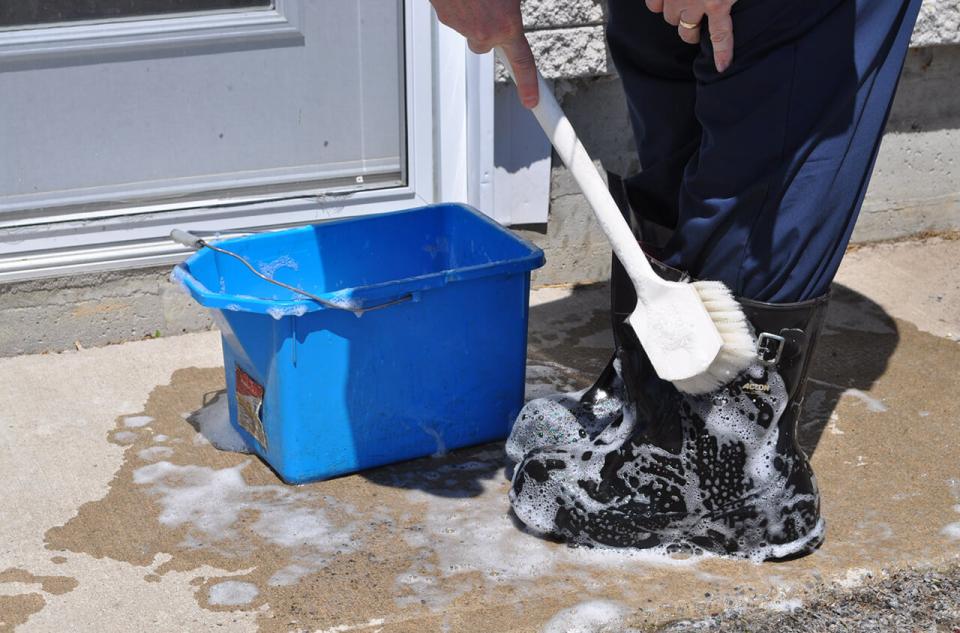
- Appropriate protection for all visitors (e.g., clean boots or boot covers)
- Biosecurity signage
- Using sanitation stations
Dairy farmers test, vaccinate, and treat their cattle if necessary. Dairy farmers clean and disinfect equipment used on the farm and ensure that the driveways to their barns are kept clean to minimize accidental propagation of bacteria from, or to, other farms.
As with all modules of the proAction program, continuous learning and improvement are values that are fostered at every stage.
RESOURCES FOR FARMERS
In 2012, Dairy Farmers of Canada and the Canadian Food Inspection Agency (CFIA) announced the completion of the National Standard for Biosecurity on dairy farms. With this module, farmers work in collaboration with their veterinarians to reduce risks of introducing existing and emerging animal diseases to a particular farm, or to control diseases if need be. Doing so will not only improve the overall health of Canadian herds but also farm productivity, a key factor of sustainability.
Validation Requirements
Prevention is key but it is also important to have plans and procedures in place to help control risks and hazards if needed. These questions can help validate biosecurity standards on the farm through self-declaration or through an independent validator.
Cattle Health Management
In the past two years, have you completed the biosecurity risk assessment with your veterinarian to identify and address biosecurity risks on your farm?
Do you record disease events for, at minimum, cows with these signs (abortion, lameness, mastitis, diarrhea, pneumonia, death) and calves with these signs (diarrhea, pneumonia, death)?
Have you established and implemented an SOP, in consultation with your veterinarian, for vaccinating against specific diseases of concern?
Cattle Additions and Movement
Have you established and implemented an SOP, in consultation with your veterinarian, to prevent the introduction of infectious diseases when bringing new cattle into your facilities from other herds?
Have your established and implemented an SOP, in consultation with your veterinarian, to prevent the introduction of infectious diseases by cattle returning to your facilities from other herds, cattle shows, etc.?
Service Providers, Visitors, Vehicles and Equipment
Have you established and implemented an SOP, in consultation with your veterinarian, to prevent the introduction of infectious diseases by family, employees, farm visitors and service providers?
Do you have biosecurity signage posted on the main access point to the farm, which is visible from the main parking area?
Fact Sheets
Keys to Disease Preventation & Economic Impacts if Left Unchecked (All diseases)
 English
September, 2021
pdf (20.67 MB)
English
September, 2021
pdf (20.67 MB)
Preventing an Outbreak – Being Vigilant about Animal Introductions
English
September, 2021
pdf (8.09 MB)
Technical Podcast
Listen to our podcasts at the links below or find them on your regular podcasts service by searching “DFC PLC”