
Traceability
The health of our herds and the safety of the food supply are top priorities for dairy farmers, and traceability is an important part of this commitment.
Tracking Identity and Movement of Dairy Cattle
Under the traceability regulations established by the Canadian Food Inspection Agency and the requirements of proAction’s Traceability module, anyone who owns or has the possession, care or control of dairy cattle must record and report animal identity, movement, location, and custodianship information.
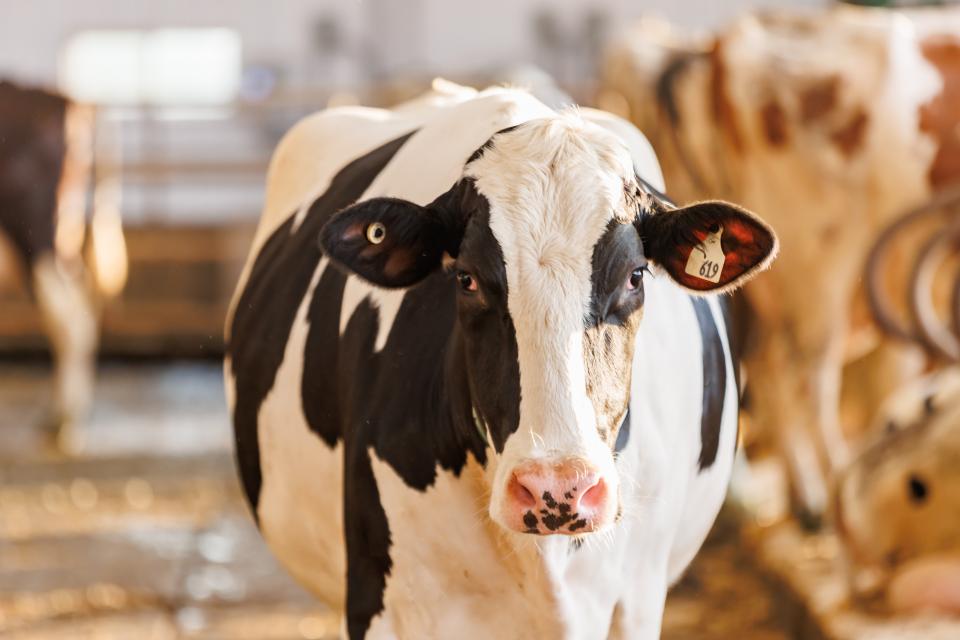
All dairy farms have a premises identification number. Every dairy cow in Canada has a unique identification number and is double tagged at birth. One of those tags has an RFID chip that farmers use to trace the animal’s movements from birth to the time it leaves the farm. Every time a calf is born, or a dairy cow moves from one location to another, or dies, the event is recorded and reported in a national system called DairyTrace.
Cows’ identification numbers are also used on the farm to track animal health and treatments throughout their lives. This traceability requirement is integral to the success of the Milk Quality, Food Safety, Animal Care, and Biosecurity modules of proAction.
By keeping such meticulous records and implementing comprehensive traceability practices, farmers can prepare for, manage and reduce the economic, environmental, and social impacts of potential animal health issues.
Robust traceability practices mean quicker response times to emergencies, but they also provide better data for research and an improved understanding of the movement of Canadian cattle.
Introducing DairyTrace
In October 2020, Lactanet Canada and Dairy Farmers of Canada launched DairyTrace, the national dairy cattle traceability program, providing a single, common framework for dairy farmers to track animal identity and movements. By harmonizing data under a common, national framework, DairyTrace promotes information sharing and can add value to research and genetics initiatives, all while aligning with the traceability module of proAction.
DairyTrace takes advantage of existing structures, systems and solutions within the Canadian dairy cattle sector, including partnerships with Attestra and Holstein Canada, which provides benefits in terms of efficiency, cost effectiveness and timely implementation.
Attestra has expertly led the livestock traceability program in Québec for over 18 years, under which 100% of Quebec dairy farms already have an animal movement system in place. Attestra hosts, supports, and transfers data to the DairyTrace system and continues to provide its well-established services to Quebec producers via SimpliTRACE.
Outside Quebec, dairy producers continue to purchase dairy bovine tags via the National Livestock Identification for Dairy (NLID) program, which is now dovetailed alongside DairyTrace customer services. As of September 1, 2021, all farmers outside Quebec are required to report dairy cattle movement information to DairyTrace.

RESOURCES FOR FARMERS
Government and farmers have discussed regulations to govern the traceability of animals in Canada for a few years. Federal regulations are now proposed for consultations and expected to take effect in 2017. In the last 20 years, all dairy cattle have been identified. Quebec and Alberta already have regulations in place. Through the proAction initiative, verification of traceability standards on farms is a proactive measure.
Validation Requirements
From obtaining a premise identification number to maintaining an efficient tag retirement system, this checklist will help Canadian dairy farmers evaluate traceability standards on the farm. Traceability criteria can be evaluated through self-declaration or through an independent validator.
Premises Identification
Do you have a premises identification number?
Animal Identification
Are your dairy cattle double-tagged with approved dairy tags (DairyTrace/Attestra)? (Record 5)
*Calves must be tagged within 7 days of birth or before the animal leaves the farm of origin, whichever occurs first.
*Any calves born on farm and destined for purposes other than dairy production may be identified with a single RFID ear tag (approved dairy tag) except for provinces that require double-tagging.
Tag Activation
Do you maintain current birth records on farm (birth date, animal ID number and PID where the animal is born)?
*In the 7 days following the animal’s birth or before the animal leaves the farm of origin, whichever occurs first.
Are you reporting animal birth information to the national traceability database within 45 days or before the animal leaves the farm of origin, whichever occurs first?
Animal Movement
For animal move-in (reception of an animal at the farm, including import):
Do you maintain current animal move-in records on farm (animal ID number, date of movement, PID of arrival and departure farms, license plate number)
*Information must be recorded within 7 days of the event or before the animal leaves the farm, whichever occurs first.
For animal move-in (reception of an animal at the farm, including import):
Are you reporting the information to the national traceability database?
*Information must be reported within 7 days of the event or before the animal leaves the farm, whichever occurs first.
Tag Retirement
For tag retirement (on-farm animal disposal or export): Do you maintain current tag retirement records on farm?
*Information must be recorded within 7 days of the event.
For tag retirement (on-farm animal disposal or export): Are you reporting the event information to the national traceability database?
*Information must be reported within 7 days of the event.

Quick Tips
This is a quick guide designed to help Canadian dairy farmers preserve herd health and to maintain standards that minimize any contamination that may arise.